Blue Spring from Orlando: The Cold-Morning Rule, Seventy-Two Degrees Forever, and a Gate That Closes
Under an hour north, a spring holds seventy-two degrees forever — so on the coldest winter mornings, hundreds of manatees shelter in it, the boardwalk fills, and the gate closes behind the early. Know which trip you’re taking.
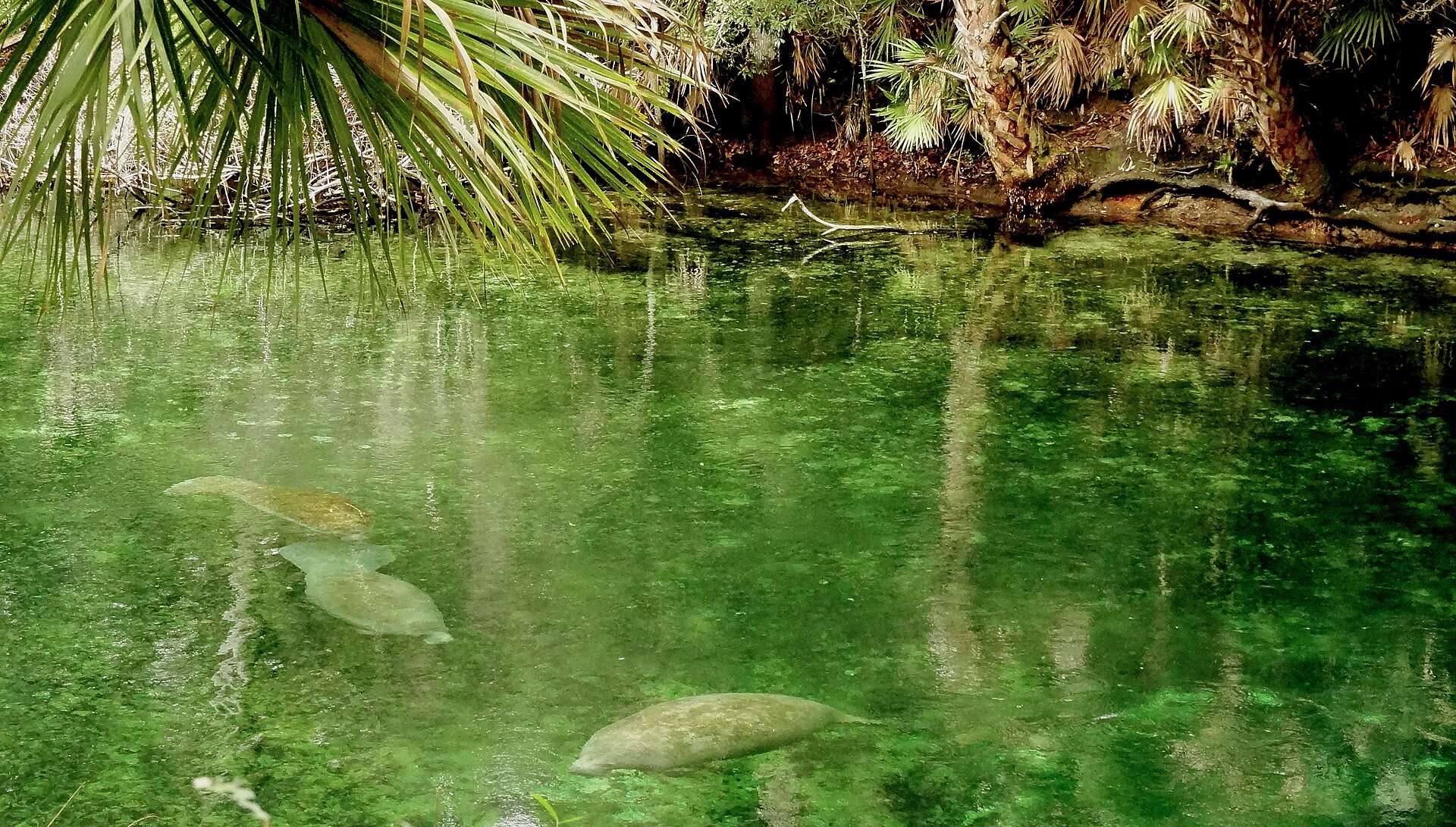
The short version
- Blue Spring State Park sits about 45–50 minutes north of Orlando off I-4 at Orange City — small per-vehicle entry, no reservations, and the alarm’s capacity truth: in manatee season the gate closes when the lots fill, often by mid-morning on cold weekends; status and counts via floridastateparks.org.
- The physics is the season: the spring vents 72-degree water year-round into the colder St. Johns River, and manatees — cold-stressed below the mid-60s — pack the run on winter’s coldest mornings by the hundreds, per the alarm’s colder-the-better rule.
- The daily manatee count posts in season (the park’s research partners publish it), and record cold snaps have counted past seven hundred animals in the run — mothers, calves, and the scarred veterans the researchers know by name.
- The boardwalk runs the spring run’s length from river confluence to the boil — free with entry, flat, and the whole viewing infrastructure: the animals drift below at pool-clarity distance, no boats, no feeding, no touching, ever.
- The season closes the water to humans: swimming, paddling, and diving in the run suspend November through March for the manatees’ sake — the alarm’s opposite-product framing is the park’s own calendar.
- Summer inverts everything: the run opens to swimming and tubing in gin-clear 72-degree water (a genuine bargain against the theme parks’ gate prices), the manatees disperse to the river, and the St. Johns boat tour runs the wildlife alternative in both seasons.

Getting there
The drive is the easy part; the alarm’s arithmetic is the plan: cold-season visits target weekday mornings at opening, with the coldest forecast of the week as the jackpot ticket — the gate-closes-when-full policy has no workaround, and afternoon arrivals on a January Saturday meet a closed park. The count and webcam check the night before calibrates expectations; Orange City’s coffee handles the too-early arrival. Summer flips the urgency to holiday weekends only.
The visit
Season version: walk the boardwalk from the lower platforms first — the river confluence is where the animals commute — then work upstream toward the boil as the light angles in: manatees rafted in dozens, calves surfacing in their mothers’ slipstreams, the occasional gar and tilapia cloud between them, all at a clarity that makes binoculars optional and cameras greedy. The upper boil’s turquoise vent closes the walk. Ranger talks and the count board add the science; two to three unhurried hours covers it with the crowds building behind you. Summer version: the same boardwalk as prelude, then the run itself — swim access points, tube floats from the upper launch, and the 72 degrees reading as cold in July exactly as it reads warm in January. Both versions can add the St. Johns River cruise for the gator-and-eagle hour; neither version touches, feeds, or chases anything, per the rules the park enforces without humor.
When to go
November through March is manatee season with the alarm’s inverse-temperature rule as the whole strategy — the week’s coldest morning beats the prettiest one, and January’s hard snaps set the records. April through October is the swimming product at summer-Florida terms: arrive early on weekends, expect afternoon storms, and enjoy spring water the theme-park corridor forgot it was next to. The two products never overlap, per the park’s own calendar — which is exactly what the alarm’s know-which-trip clause protects you from discovering at the gate.
Frequently Asked Questions
How many manatees will I actually see?
Cold-snap mornings run from dozens to several hundred — the posted daily count is the honest answer, and a 40-degree dawn reliably beats a 65-degree one by an order of magnitude. Warm winter spells thin the run as the animals forage the river; the forecast, not the calendar, sets the show.
Why can’t I swim with them?
The run closes to all water activity in season by rule — crowding stresses cold-stressed animals, and the park’s viewing model is boardwalk-only by design. The famous swim-with-manatee permits belong to Crystal River on the Gulf side, a different park under different federal rules and its own day’s drive.
Is summer swimming actually good?
Genuinely — the run is clear, cool, tree-shaded, and cheap, with tubing from the upper entry as the default float. It’s the local-knowledge counterprogram to the gate-price corridor twenty minutes south. Holiday weekends hit the same capacity closures; the early rule never fully retires.
What’s the boat tour add?
The St. Johns cruise runs from the park in both seasons — gators, eagles, and river ecology at pontoon pace, with winter trips sometimes catching manatees in transit. It’s the sit-down complement to the boardwalk’s standing hours, booked at the landing.
Blue Spring or Kennedy Space Center from Orlando?
Kennedy (documented on this network with its launch-day honesty) for the full-day space pilgrimage; Blue Spring for a half-day of wildlife that answers to the thermometer. Opposite registers at similar distances — and the cold-snap forecast that makes Blue Spring spectacular is independent of everything Kennedy cares about.