St. Augustine from Orlando: The Coquina Fort, the Oldest City Claim Done Right, and the Fountain of Youth in Order
Two hours northeast, the oldest continuously occupied European city in the continental U.S. keeps a shell-stone fort that ate cannonballs and a main street best walked before the trolleys wake. The kitsch comes with a real dig underneath.
The short version
- The drive runs I-4 to I-95 north — about two hours from Orlando’s tourist corridor to the historic district’s parking garages, with no transit version worth printing.
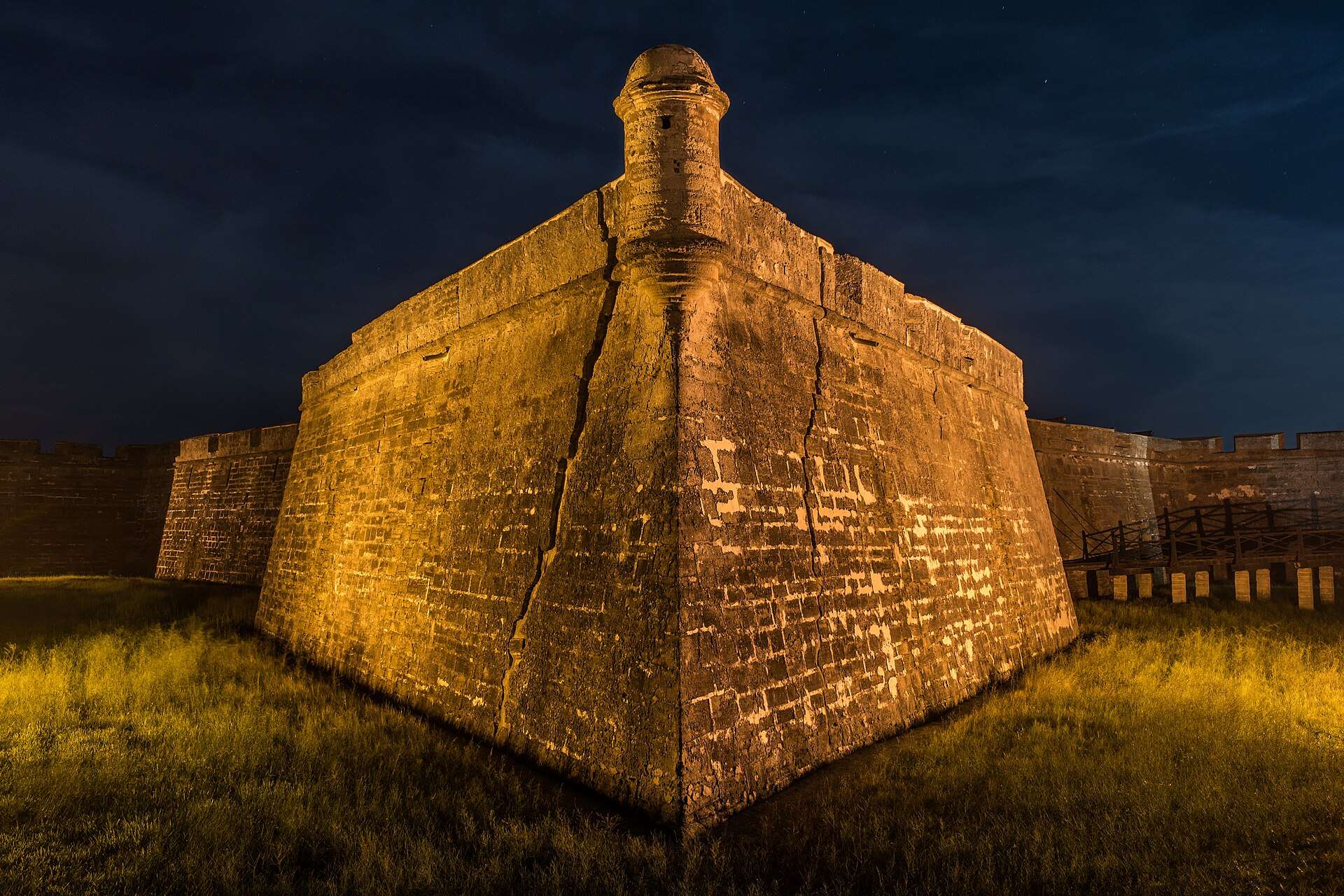
- Castillo de San Marcos charges about $15 per adult (kids 15 and under free), first-come at the gate — the 1695 Spanish fort whose coquina shell-stone walls absorbed British cannonballs like a held breath; details at nps.gov/casa.
- The founding claim, stated precisely: Spanish admiral Menéndez established St. Augustine in 1565, making it the oldest continuously occupied European-established city in the continental United States — four decades before Jamestown, and the town enjoys saying so.
- St. George Street’s pedestrian spine runs the colonial quarter’s balconies, courtyards, and shops — the alarm’s early walk beats the trolley waves that fill it by late morning.
- The 1874 lighthouse across the bridge climbs 219 steps to the coast’s best panorama; Flagler’s Gilded-Age campus — the Ponce de León hotel turned Flagler College, tours running — supplies the town’s second architectural register.
- The Fountain of Youth Archaeological Park is the honest oddity the alarm framed: Ponce de León kitsch, peacocks, and cannon-fire demos layered over the genuine first-settlement dig site and Timucua history — order of appreciation as prescribed.

Getting there
I-4’s escape from Orlando sets the tone (leave before nine and it behaves), I-95’s run north does the miles, and the historic district’s garages by the visitor center solve the car for the day — the old town walks entirely. Summer thunderstorms keep an afternoon appointment most days; the sequencing below plans around them. The return against I-4’s evening westbound argues for a dinner-first departure or an early one — the middle inherits the traffic.
The day
St. George Street first at the alarm’s early hour: the balconied quarter with its shops still opening, the Oldest House and the colonial courtyards at strolling pace. The Castillo mid-morning: ramparts, the gun deck’s bay command, ranger talks on the siege history and the coquina’s cannonball-swallowing trick — 90 minutes with the water views included. Lunch in the quarter (the Spanish-adjacent institutions and the datil-pepper sauce economy both perform). The afternoon splits by appetite: the lighthouse climb and maritime museum across the bridge, Flagler College’s gilded tour, or the Fountain of Youth’s cheerful double act — springhouse sip, peacocks, and the first-settlement archaeology taken in the alarm’s order. The bayfront’s evening walk past the Bridge of Lions closes it; dinner before the drive beats I-4’s arithmetic.
When to go
October through April runs the walking weather; summer works on the early-fort, indoor-afternoon, storm-respecting pattern the town itself keeps. Nights of Lights (mid-November through January) wraps the quarter in its famous illumination — the region’s best holiday spectacle and its densest crowds, worth either aiming for or scheduling around with intent. Hurricane season’s watches are the one calendar caveat coastal Florida always carries.
Frequently Asked Questions
Is the fort worth it beyond the photo?
Fully — it’s the country’s oldest masonry fort, the ranger program is strong, and the coquina story (soft shell-stone that absorbed rather than shattered under bombardment) is the kind of fact that reorganizes how you see the walls. The $15 covers seven days if you return.
What’s actually at the Fountain of Youth?
A springhouse pouring sulfurous sips, mid-century tourist theater — and, underneath, the genuine archaeological footprint of Menéndez’s 1565 settlement and the Timucua town it met. The alarm’s in-order framing is the whole trick: enjoy the kitsch, respect the dig.
How does the oldest-city claim hold up?
Precisely worded, it holds: oldest continuously occupied European-established city in the continental U.S. (San Juan predates it; Indigenous settlement predates everything). The town’s plaques get the wording right, which this page appreciates professionally.
St. Augustine or Kennedy Space Center from Orlando?
Kennedy (documented on this network) for the single-site full-day spectacle; St. Augustine for a walkable town of layered history. Opposite directions, equal drives — the space-versus-Spain question answers itself by household.
Is the beach worth adding?
Anastasia Island’s state-park strand sits ten minutes over the bridge for a legitimate two-hour add in the warm months — the lighthouse pairs with it geographically. Full beach days belong to the coast’s own trip; this one’s about the town.